
Wow! The first time I opened a DeFi DApp across three chains in one browser session, my head spun. Medium-sized discoveries don’t come every day; this one did. At first it felt like juggling knives—thrilling, risky, and a little reckless—but then I noticed somethin’ else: a smoothness I hadn’t expected. Longer story short, handling assets across Ethereum, BSC, and Polygon in one extension made a bunch of tiny frictions disappear, though there were caveats and trade-offs that kept me awake at night thinking about security models and UX assumptions.
Whoa! Seriously? Yeah. My initial gut said: “Use one wallet per chain, keep things simple.” But then I tried consolidating. At first I thought that fewer wallets equals less attack surface, but then realized that context switching itself is an attack vector—phishing gets smarter when your brain is juggling networks. Okay, so check this out—multi-chain wallets flip that trade. They reduce cognitive load by keeping history and approvals in a single UI, while forcing you to be extra careful about network selection and contract approvals, because one mistaken click can touch multiple asset buckets if you’re not paying attention.
I’ll be honest: some parts bug me. The UX patterns vary wildly between chains. Shortcuts that work on Ethereum don’t always map cleanly to other EVM-compatible networks, and gas heuristics can be weird. (oh, and by the way…) I once tried to speed a swap during congestion and ended up overpaying gas on a layer-2 because the wallet didn’t surface the same fee optimization as another I’d used. That cost me a few bucks and a bruised ego—lesson learned. On the other hand, having a single place to check approvals and revoke them is very very important when you’re active across chains.
Initially I thought multi-chain meant convenience only. But then I dug deeper—really dug—and realized it also shifts where trust lands. A browser-extension wallet that speaks to many networks has to manage RPC endpoints, chain IDs, nonce handling, and cross-chain UI nuance. That complexity can hide vulnerabilities if the extension doesn’t sandbox or validate inputs correctly. So yes, the idea is seductive, but the implementation discipline matters more than the feature list.
Why I Started Recommending rabby wallet
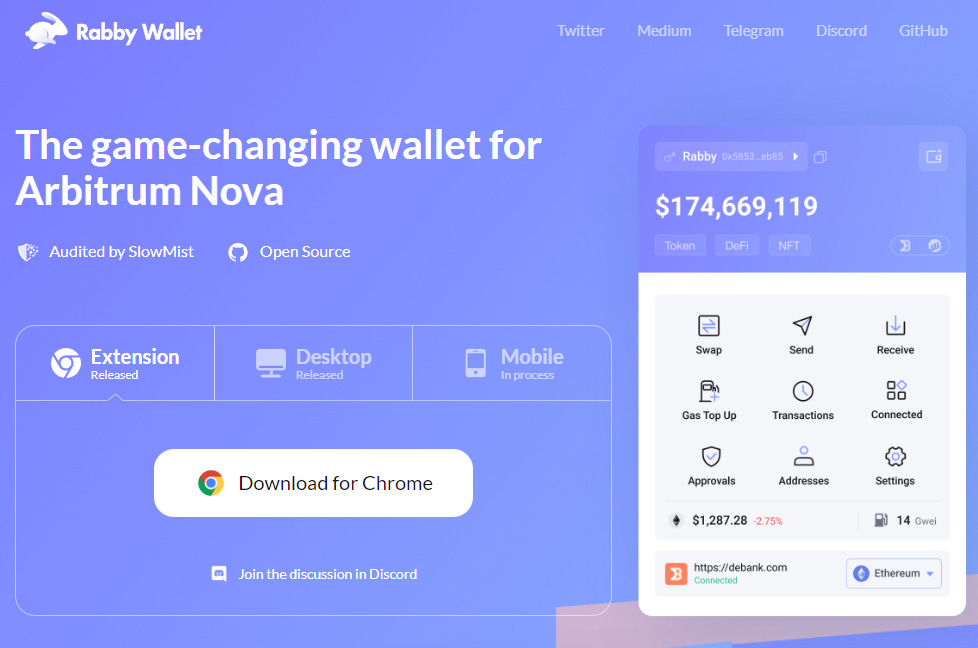
Here’s the thing. I’ve tried a dozen extensions over the years, and while none are perfect, one stood out in balancing safety and multi-chain support: rabby wallet. My instinct said “give it a week,” and after that week I kept it installed. It was the combination of clear permission prompts, an approvals dashboard, and sane defaults that made me keep coming back. Initially I worried about how an extension would manage multiple RPCs without confusing the user, but rabby wallet’s network UX felt deliberate rather than slapped together.
Hmm… let me rephrase that—what sold me wasn’t just the bells and whistles. It was the small things: consistent gas suggestions across chains, clear labeling of which network a dApp requested access to, and fast access to revoke allowances. These are the sorts of features that prevent the “oops, I approved that” syndrome. On one hand, you’ll always have to manually confirm high-risk ops. Though actually, if a wallet nudges you with the right info beforehand, your odds of making a mistake drop a lot.
My instinct said to compare it head-to-head with my other favorites, and I did. The comparison wasn’t scientific—more like “real-world stress testing.” I swapped tokens, adjusted slippage, bridged assets (carefully), and tried interacting with contracts that required consecutive approvals. On complex flows, rabby wallet stayed readable and didn’t hide critical info behind layers of settings. That matters when you’re rushed or slightly distracted—both very common states for traders and NFT flippers at 2 AM.
Something felt off about other wallets’ approval screens—they often show a handful of zeros and technical jargon that means nothing unless you’re a dev. I appreciated seeing plain-language summaries and a sane default for infinite approvals that encourages manual limits. There are trade-offs—developer tooling sometimes gets deprioritized for polish—but for most users, that’s a good trade.
Okay quick tangent: I lost a small test amount once because I forgot to change the RPC after a network switch. Not a huge sum, but annoying. The the moral? Consistency in network indicators matters. The wallet should make the active chain obvious. Rabby does this better than many, but no wallet is foolproof. You’ll still have to cultivate habits—double-check the chain, check the contract, breathe.
Practical Tips for Using a Multi-Chain Extension Wallet
First, set network labels to something you recognize. Short sentence. Don’t use raw RPC names if you can avoid it—rename things like “Mainnet” or “Polygon-Main” to what you actually understand. Longer explanation: take two minutes to configure readable names and icons so that, when a dApp requests approval, your brain has to do less mapping between what you see and what you think it means, which lowers the chance of error when you’re in a hurry or stressed.
Second, use the approvals dashboard religiously. Seriously? Yes. Check it weekly. Revoke old allowances. I had an old token approval lingering from a liquidity pool test months ago—no reason to keep that open. Initially I thought revoking was a pain, but that friction is actually a feature: it makes careless approvals less attractive.
Third, split funds by intent. Keep a hot wallet for trading and a colder one for long-term holdings. This isn’t new advice; it’s classic. But with multi-chain wallets, it’s even more useful. Being able to switch contexts within one extension helps you avoid mixing risk profiles, though it doesn’t remove the need to segregate funds.
Fourth, be wary of RPC tampering. If a wallet lets you add custom RPCs, only use endpoints you trust. On one hand, custom RPCs are useful for low-fee experimentation; though actually, a malicious RPC can misrepresent chain state or replay transactions if you’re not careful—it’s subtle but real. If you’re using a custom node, run it yourself or pick a reputable provider.
Fifth, watch bridging UX. Bridges could be clunky and sometimes require confirmations across multiple chains. Multi-chain wallets help by keeping your approvals visible, but they also introduce a single point of interaction where mistakes can multiply. Be deliberate during bridge flows—double-check addresses and chain destinations. And take screenshots if you must—documenting things helps when something goes sideways.
Common Questions About Multi-Chain Extension Wallets
Is one multi-chain wallet safer than several single-chain wallets?
Short answer: it depends. My quick take: consolidation reduces mental load, but concentrates risk. If the extension has strong sandboxing, clear approvals, and a robust permission model, then it’s probably safer for daily use than juggling multiple wallets carelessly. However, for large cold holdings, diversify your storage method—hardware wallets are still king.
How do I reduce phishing risk when using browser extensions?
Trust indicators are your friend. Use reputable extensions, check extension permissions before installing, and validate the dApp domain—don’t just accept a popup because it looks legit. Sometimes phishing is clever: a site can mimic visuals. Pause, look at the URL bar, and if somethin’ smells off, bail. Also, keep your extension updated and limit permissions when possible.
Can I use hardware wallets with multi-chain extensions?
Yes. Many extensions support hardware devices for signing. That’s a great compromise: you get the convenience of an integrated multi-chain UI while keeping keys offline for final approvals. The UX isn’t flawless (expect extra clicks), but the security gains are worth it for larger transactions.